
Wellness that moves with you
Get 10% off your first order,
Sign up for wellness tips and exclusive offers, straight to your inbox.
No spam. Just useful wellness tips.
No thanks, I’ll pass

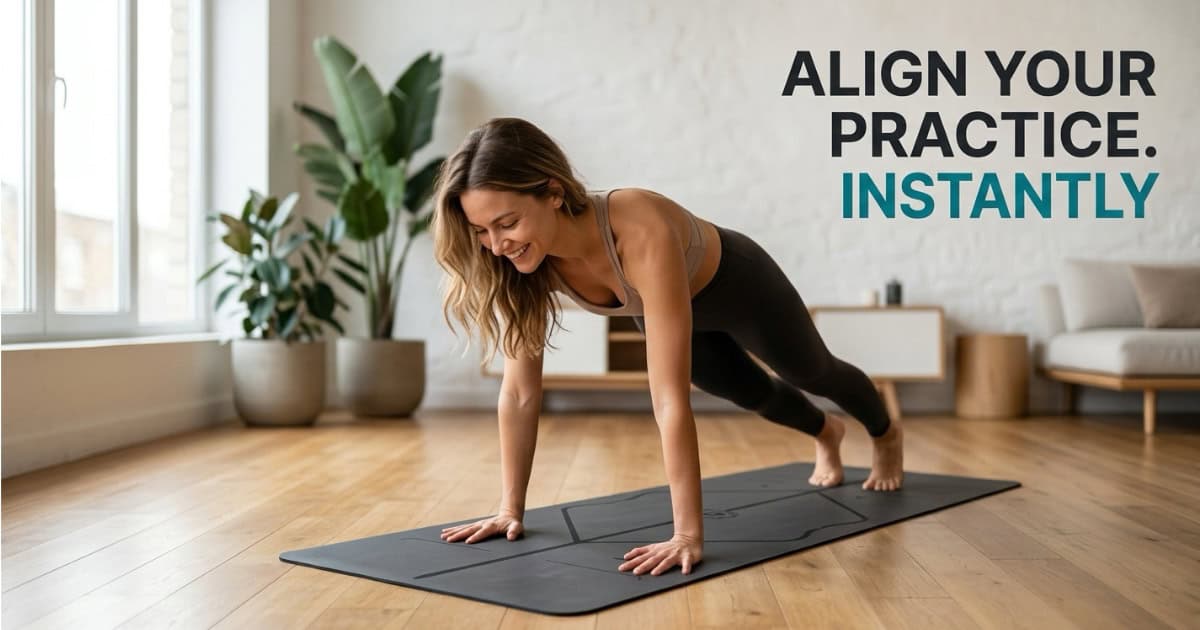
You unroll your mat, step into your first downward dog, and suddenly, your hands start sliding. It is a frustrating feeling. Slipping during yoga breaks your focus. It forces you to tense your muscles just to stay upright.
Finding the best yoga mat solves this problem. A reliable mat keeps you grounded, supports your joints, and gives you a stable surface, even when you sweat.
If you are looking for a yoga mat for hot yoga or just want better grip, you have many options. This guide will help you understand how different materials work so you can pick the exact mat you need.
Slipping is not just an annoyance. It changes how your body moves. When your hands or feet slide, you naturally compensate by gripping with your toes, locking your knees, or tensing your shoulders. This defeats the purpose of the pose.
Losing your grip also leads to poor form. “Props and supportive yoga gear help you keep proper body alignment and avoid injury from slipping,” says Marian Garfinkel, a yoga and arthritis researcher.
This advice is backed by data. According to a global survey conducted with the International Association of Yoga Therapists, poor technique and improper alignment are among the most common causes of yoga injuries. A secure surface gives you the traction you need to hold your alignment safely.
If you want to keep your yoga mat non slippery, you have to choose the right material. Yoga mats fall into two main categories when it comes to handling moisture.
Open-cell mats absorb moisture. Materials like natural rubber and polyurethane fall into this category. When sweat hits an open-cell mat, the surface acts like a sponge. It pulls the moisture away from the top layer, giving you a strong and sticky grip. If you want the best yoga mat for hot yoga without relying on a towel, an open-cell rubber or polyurethane mat is the clear winner.
Closed-cell mats block moisture. Materials like PVC and TPE are closed-cell. These mats are incredibly durable and easy to wipe clean. However, because they repel water, sweat pools on the surface. If you use a PVC mat for a sweaty practice, you will slide around unless you place a microfiber yoga towel on top of it
Grip is only half the equation. Your mat also needs to protect your body. The American Council on Exercise notes that proper joint stabilization during exercise is vital for preventing injury and deepening your range of motion. The thickness of your mat plays a major role in how stable your joints feel.
Most standard mats are around 3mm to 4mm thick. This is a great middle ground. It gives you enough cushion for your knees while keeping you close to the floor for standing poses.
If you have sensitive knees or wrists, you might prefer a 5mm or 6mm mat. This extra padding makes kneeling poses much more comfortable. Just keep in mind that thicker mats are heavier. They can also make balancing poses feel slightly unstable because your feet sink into the foam.
Mats that are 8mm or thicker are usually meant for general fitness workouts. They are too thick for a standard yoga practice and will make it hard to feel connected to the floor.
Beyond material and thickness, a few smart features can make your practice much easier.
Alignment markers are incredibly useful. Many people struggle to know if their feet are lined up correctly in poses like Warrior II. A mat with visual guides, like the Yoga Mat with Alignment Lines, takes the guesswork out of your posture. You can look down and instantly correct your stance. This builds better habits over time.
Natural rubber mats offer amazing grip, but they are heavy. If you walk or bike to your studio, carrying an eight-pound mat gets old fast. In that case, a lighter TPE mat or a foldable travel mat might be a better choice.
Even the best yoga mat will lose its grip if it gets dirty. Over time, natural oils from your skin, sweat, and floor dust build up on the surface. This creates a slick film.
To keep your mat performing well, clean it regularly. Closed-cell mats can be wiped down with a mix of water and a few drops of mild dish soap. Open-cell mats need more care. Since they absorb liquid, spraying them with soapy water means the soap gets trapped inside. For open-cell rubber mats, simply wipe them down with a damp cloth using plain water.
Avoid harsh chemical sprays or heavy essential oils. These break down rubber and make the mat even more slippery. Always let your mat air dry completely before rolling it up.
There is no single perfect mat for everyone. The right choice depends on how and where you practice.
Think about what bothers you most during your current practice. If it is slipping, upgrade your material. If it is joint pain, look at thickness. Choosing the right foundation will help you focus less on your gear and more on your actual practice.